Protein Calculator

Work out how much protein you need each day from your body weight, your activity level and your goal. This protein calculator gives you a daily target in grams, a range to aim inside, and how much protein to eat at each meal. It is the standalone daily protein tool, while our protein intake calculator gives a simpler weight based daily need.

Your current body weight. Use kilograms or pounds, and pick the unit next.

Pick the unit your weight is in.

How often you train or move hard each week.

Building muscle and losing fat both raise the rate a little.

How many meals you want to split the daily target across.

Formula: daily protein = weight in kg x rate in g per kg. The rate starts at 1.2 g per kg for a sedentary adult and rises to 1.8 g per kg for a very active adult. Your goal adjusts it, with building muscle multiplying it by 1.15 and losing fat by 1.10, capped at 2.2 g per kg. The range runs from the rate to the rate plus 0.4 g per kg, and the target is the middle of the range rounded to the nearest 5 g.


How to Use the Protein Calculator

Enter your weight, pick your activity level and your goal, and the calculator works out your daily protein in grams. It shows a target, a range to aim inside, and how much protein belongs at each meal.

  1. Enter your body weight and pick kilograms or pounds.
  2. Pick your activity level, from sedentary to very active.
  3. Pick your goal. Maintain keeps the base rate, build muscle raises it by 15 percent, and lose fat raises it by 10 percent.
  4. Pick how many meals you eat a day, from 3 to 5.
  5. Press Calculate, or press Enter. The daily target appears first and large, with the range, the per meal amount and the RDA minimum below.
A photo of a plate of grilled chicken, boiled eggs, Greek yogurt and lentils on a kitchen table with a notebook
A 75 kg adult who trains and wants to build muscle aims for about 150 g of protein a day.

The Protein Formula

The protein formula is daily protein = weight in kg x rate in g per kg. The rate depends on how active you are. A sedentary adult starts at 1.2 g per kg, a lightly active adult at 1.4, a moderately active adult at 1.6, and a very active adult at 1.8. Your goal then adjusts the rate. Building muscle multiplies it by 1.15, losing fat multiplies it by 1.10, and maintaining leaves it alone. The rate never goes above 2.2 g per kg.

The range runs from the rate to the rate plus 0.4 g per kg, so a rate of 1.84 gives a range of 1.84 to 2.2 g per kg. The target is the middle of that range rounded to the nearest 5 g, because a round number is easier to aim at than 151.5 g. The RDA of 0.8 g per kg is the minimum for a healthy adult, not a target for active people. Our protein intake calculator gives a simpler daily need from weight and activity alone.

Worked Example: 75 kg, Moderately Active, Building Muscle

A 75 kg adult trains 3 to 5 days a week and wants to build muscle. Here is exactly what the calculator does.

  1. Base rate: moderately active gives 1.6 g per kg.
  2. Goal adjustment: building muscle multiplies by 1.15, so 1.6 x 1.15 = 1.84 g per kg.
  3. Low end: 75 kg x 1.84 = 138 g.
  4. High end: 75 kg x 2.2 = 165 g, because 1.84 plus 0.4 is 2.24 and the rate caps at 2.2.
  5. Target: the middle of 138 and 165 is 151.5 g, rounded to the nearest 5 g = 150 g a day.
  6. Per meal: 150 g over 4 meals = 38 g per meal.

As a second check, the same person in pounds weighs 165 lb, which is 74.84 kg. At the same rate the range is 120 to 150 g with a target of 135 g a day and about 34 g per meal. The RDA minimum for 75 kg is 75 x 0.8 = 60 g a day, which sits well below the 150 g target. The same steps work for any weight, so try your own numbers in the tool above.

A photo of a person weighing grilled chicken breast on a small digital kitchen scale
75 kg at 1.84 g per kg gives a range of 138 to 165 g, with a target of 150 g a day.

What the Protein Ranges Mean

The RDA of 0.8 g per kg is the floor. It is the amount that prevents deficiency in nearly all healthy adults, about 56 g for a 70 kg adult. It is not the amount that supports training, muscle gain or fat loss, so active people need more.

General health sits at 1.2 to 1.6 g per kg, which is the range in the 2025 to 2030 Dietary Guidelines for Americans. A 75 kg adult at that range needs 90 to 120 g a day. People who lift weights do better at 1.6 to 2.2 g per kg, because a meta-analysis of protein and resistance training found that gains in lean mass stopped improving past about 1.62 g per kg a day. People who lift while eating in a calorie deficit sit at the top of that range, around 1.8 to 2.2 g per kg, to hold on to muscle while they lose fat.

The range matters more than any single number. Your exact need shifts with your training, your body composition and your total calories, so a range of 138 to 165 g is more honest than a single figure. Pick the target in the middle, eat near it most days, and adjust if your weight or your training changes.

How to Spread Protein Across Meals

Muscle protein synthesis responds to each meal up to roughly 0.4 g per kg, about 25 to 40 g for most adults, and then levels off for a few hours. Spreading the daily total across 3 to 5 meals uses it a little better than eating most of it at one meal. For a 150 g target over 4 meals, that is about 38 g per meal.

Build each meal around one protein rich food. A palm sized portion of chicken breast gives about 30 g, two eggs give about 12 g, a cup of Greek yogurt gives about 17 g, and a cup of lentils gives about 18 g. Our macro calculator splits your whole day into protein, carbs and fat, and our calorie calculator works out the calories that target sits inside.

Timing matters less than the total. A meal with 20 g still counts toward the day, and a meal with 50 g is not wasted, it just adds less extra benefit than the first 30 to 40 g. If you train, put one of the bigger meals within a couple of hours after training, and keep the rest of the day even.

Common Mistakes to Avoid

The most common mistake is treating the RDA of 0.8 g per kg as a target. It is a minimum for a sedentary adult, and an active person who eats only 60 g a day at 75 kg will struggle to build or keep muscle. Use 1.2 g per kg as the floor for an active adult instead.

A second mistake is entering pounds as kilograms. A 165 lb adult is 74.84 kg, not 165 kg, and the calculator would give more than double the right answer. Check the unit selector before you press Calculate, and use the pounds option if your scale reads in pounds.

A third mistake is chasing a single exact number. Protein needs vary day to day, food labels round their figures, and your weight moves a little each week. Aim inside the range, hit the target most days, and do not worry about a day that lands 10 g high or low. If you have kidney disease or another medical reason to limit protein, talk to your doctor before raising your intake.

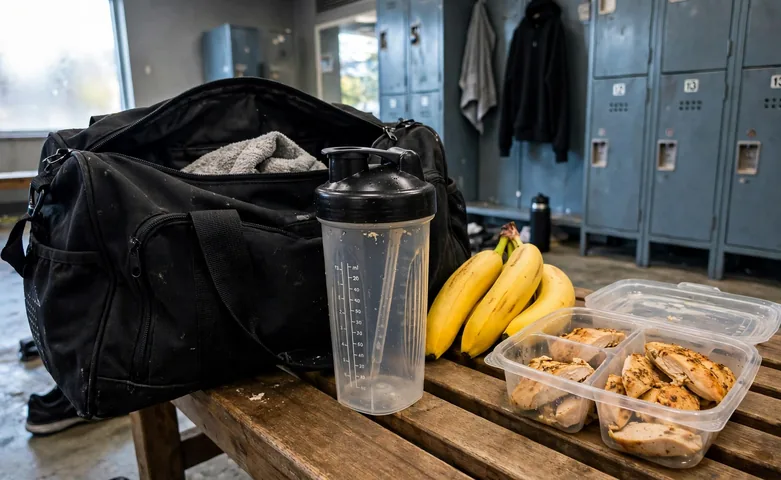
A photo of a gym bag with a protein shaker bottle, bananas and a container of cooked chicken on a bench
Spread the daily target across 3 to 5 meals of about 25 to 40 g each.

Frequently asked questions

How much protein do I need per day?

It depends on your weight, activity and goal. A 75 kg adult who trains 3 to 5 days a week and wants to build muscle needs 138 to 165 g a day, with a target of 150 g. A sedentary adult of the same weight needs 90 to 120 g.

What is the RDA for protein?

The Recommended Dietary Allowance is 0.8 g of protein per kg of body weight a day. For a 75 kg adult that is 60 g a day. It is a minimum that prevents deficiency, not a target for active people.

How much protein should I eat per meal?

About 25 to 40 g per meal works for most adults, which is roughly 0.4 g per kg. For a 150 g daily target over 4 meals, that is about 38 g per meal.

Is 2 g of protein per kg too much?

For most healthy adults who train hard, no. The range for muscle gain runs to 2.2 g per kg, and this calculator caps the rate there. People with kidney disease should stay lower and ask their doctor first.

How is this different from the protein intake calculator?

The protein intake calculator gives a simpler daily need from your weight and activity. This protein calculator adds your goal, shows a range with a rounded target, and splits the target across your meals.

Does protein intake change when I lose weight?

Yes, it usually goes up. When you eat in a calorie deficit while training, the rate rises to around 1.8 to 2.2 g per kg to help you keep muscle while you lose fat. Pick the lose fat goal to see that range.

This calculator gives general nutrition information, not medical advice. Talk to your doctor or a registered dietitian before changing your diet, especially if you have kidney disease or another health condition.

Start Calculating Now!

Discover the power of smart tools at KitQuarter.

Explore All Tools