Home EV Charger Surge Protector Installation Cost Calculator

Work out what surge protection for a home EV charger costs to install. Enter the device cost, the labor hours and rate, the permit fee and materials, then see the total installed cost, the cost per year and how it compares with the charger it protects.

The SPD itself. A Type 2 panel device runs $150 to $300, and a high-end dual-stage unit runs more.

How many hours the electrician needs. A panel SPD usually takes 1 to 2 hours.

The electrician hourly rate, typically $80 to $150 an hour for residential work.

The permit fee if your area requires one for panel work. Enter 0 if no permit is needed.

Breaker, wiring and mounting hardware. Enter 0 if everything is included in the device price.

How long the device is expected to last. Most panel SPDs last 10 years or more.

What a new charger like yours costs, so the tool can compare protection cost with what is at risk.

Formula: total installed cost = device cost + labor cost + permit fee + extra materials, where labor cost = labor hours x labor rate per hour, and cost per year = total installed cost / lifespan in years.

How to Use the Home EV Charger Surge Protector Installation Cost Calculator

An EV charger is a permanently wired 240 volt appliance that stays energized day and night, so a surge has a direct path into the charger and the car. This calculator prices the surge protector, the labor, the permit and the materials, then spreads the total over the life of the device so you can see what the protection really costs per year.

  1. Enter the surge protector device cost from the quote or the product price.
  2. Enter the labor hours and the labor rate per hour.
  3. Enter the permit fee, or 0 if no permit is needed, and any extra materials.
  4. Enter the expected lifespan of the device and what a new charger like yours costs.
  5. Press Calculate, or press Enter. The total installed cost appears first and large, with the labor cost, the cost per year and the charger value below.
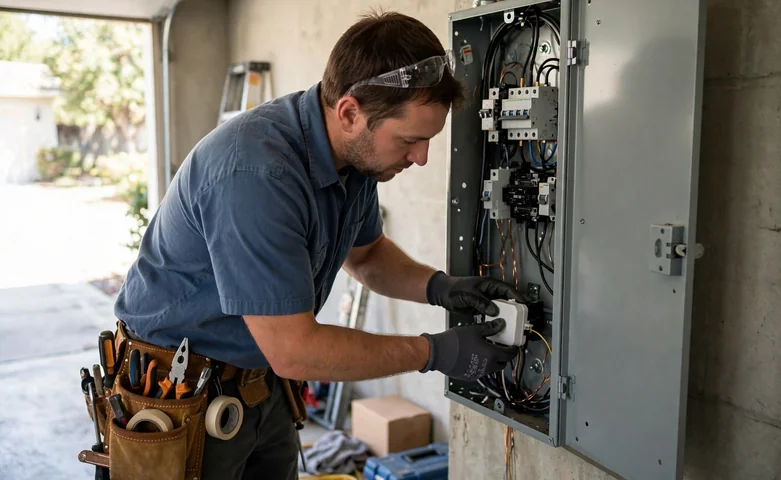
A photo of a licensed electrician installing a surge protection device inside a home electrical panel next to an EV charger circuit
A $225 device, 1.5 hours of labor at $110 and a $75 permit add up to a $505 installed cost.

The EV Charger Surge Protector Installation Cost Formula

Labor cost = labor hours x labor rate per hour. Total installed cost = device cost + labor cost + permit fee + extra materials. Cost per year = total installed cost / lifespan in years. Protection ratio = charger replacement cost / total installed cost.

Published 2026 ranges support the result. A whole-house surge protector installed at the panel typically costs $300 to $700, with the device at $150 to $300 and installation at $150 to $500. A high-end dual-stage unit runs $700 to $1,200 installed. A straightforward Level 2 charger install runs $700 to $1,600, so adding surge protection while the electrician is already in the panel is the cheapest time to do it.

Worked Example: Surge Protection for a Home EV Charger

A homeowner has a Level 2 charger worth $1,200 and gets a quote for a $225 Type 2 surge protector, 1.5 hours of labor at $110 an hour, a $75 permit and $40 of materials. The device is expected to last 10 years.

  1. Labor cost: 1.5 hours x $110 = $165.
  2. Total installed cost: $225 + $165 + $75 + $40 = $505.
  3. Cost per year: $505 / 10 years = $50.50 a year.
  4. Protection ratio: $1,200 / $505 = 2.38, so the charger is worth 2.38 times the protection cost.

As a second check, take a $300 high-end device, 2 hours at $125 an hour, a $150 permit and $60 of materials, with a 12 year life and a $2,500 charger. The labor is $250, the total is $760, the cost per year is $63.33 and the ratio is 3.29. The same steps work for any quote, so try your own numbers in the tool above.

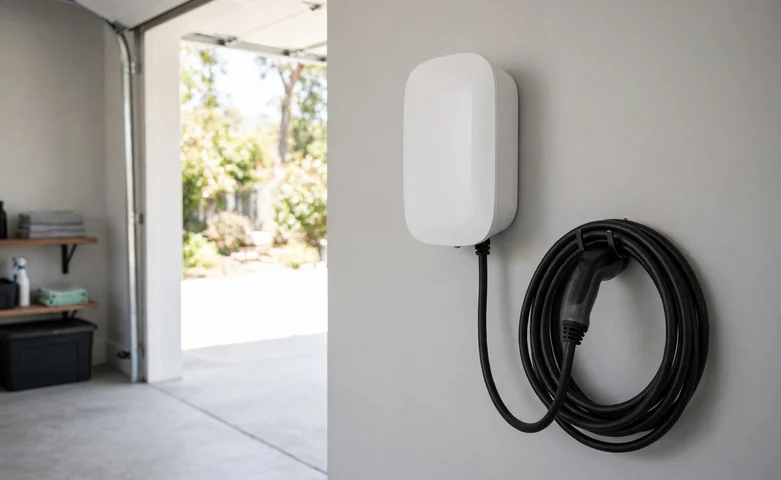
A photo of a white home EV charger mounted on a garage wall with its charging cable coiled beside it
The worked example costs $505 installed, which is $50.50 a year over 10 years.

What Changes the Price of Surge Protector Installation

The device is the biggest driver. A basic panel-mounted Type 2 unit runs $150 to $300, while a high-end dual-stage unit with a higher surge current rating runs $700 to $1,200 installed. Look for a UL 1449 listed device with a surge current rating in the tens of thousands of amps and an indicator light that shows the unit is still alive, because a protector that has absorbed a major surge needs replacing.

Labor is usually 1 to 2 hours when the panel has space, because the device takes two breaker spaces and connects through a dedicated breaker. A full panel, a long cable run, trenching to a detached garage, or drywall repair can push labor well past that. The permit adds $75 to $150 where one is required, and some areas require a permit for any panel-level work. Our home generator installation cost calculator prices another panel-level home project the same way.

Since the 2020 code cycle, new panel installations and replacements are required to include surge protection. If your panel is being replaced anyway, the protector is part of that job, not an extra.


Type 1, Type 2 and Whole-House Protection

A Type 2 surge protective device mounts at the panel and guards every circuit at once, including the hardwired equipment no power strip can ever reach, such as the EV charger, the HVAC system and the water heater controls. A Type 1 device sits ahead of the panel, at the service entrance, and is used where the utility or the local code calls for it. Whole-house protection means a Type 1 or Type 2 device at the panel, not a power strip.

A power strip protects only what is plugged into it, and it cannot protect a hardwired EV charger at all. A panel device clamps a spike down and sends the excess safely to ground before it travels down the branch circuits. No device fully stops a direct lightning strike on the house, which is a rare event with its own insurance conversation, but a panel device handles nearby strikes, utility switching and the small surges your own appliances create every day. Our heat pump installation cost calculator prices another hardwired home system that benefits from the same protection.

Is Surge Protection Worth It for an EV Charger

Compare the cost with what is at risk. In the worked example the protection costs $505 and the charger costs $1,200, so one saved charger pays for the protection more than twice over. The real risk is bigger than the charger, because a surge can travel past it into the car's onboard charger, which is one of the most expensive single components on the vehicle to replace.

Repairing or replacing a surge-damaged charger costs far more than installing a protector, and it also costs downtime while the car cannot charge at home. The cheapest time to add protection is during the charger install itself, because the electrician is already in the panel and the permit is already open. If your charger is already installed, a standalone visit still usually costs $300 to $700, which is small against a $1,200 charger and a car worth far more. Our home water softener installation cost calculator prices another home install where the same timing logic applies.

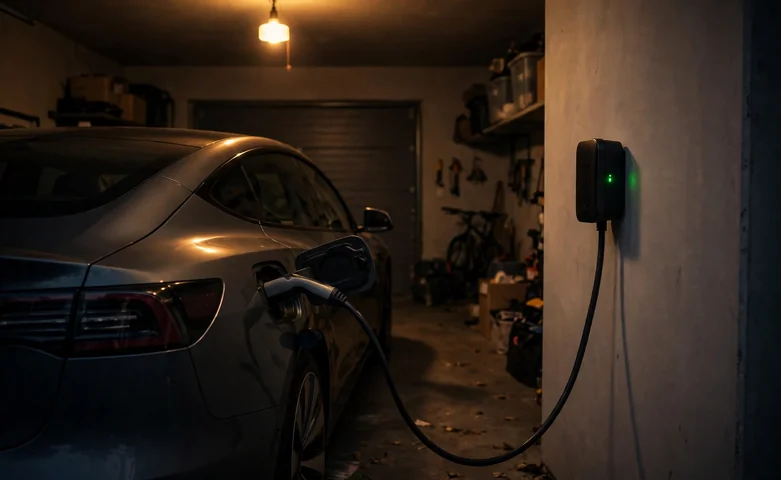
A photo of an electric car plugged into a home wall charger in a garage at night with the charging light on
One saved charger pays for the $505 protection more than twice over.

Frequently asked questions

How much does EV charger surge protector installation cost?

A whole-house surge protector installed at the panel typically costs $300 to $700, with the device at $150 to $300 and installation at $150 to $500. In the worked example, a $225 device with labor, permit and materials totals $505 installed.

Does an EV charger need surge protection?

Yes, it is strongly recommended. An EV charger is a permanently wired 240 volt appliance that stays energized, so a surge has a direct path into the charger and the car's onboard charger. A panel surge protector costs $300 to $700 installed, far less than replacing a surge-damaged charger.

What is the difference between a Type 1 and a Type 2 surge protector?

A Type 2 device mounts at the panel and guards every circuit at once, including the EV charger. A Type 1 device sits ahead of the panel at the service entrance. For a home EV charger, a Type 2 panel device is the usual choice.

Can I install a surge protector for my EV charger myself?

No, hire a licensed electrician. A panel surge protector installs inside the electrical panel, connects through a dedicated breaker and needs a permit in some areas. It is panel-level electrical work and a safety hazard for anyone who is not qualified.

How long does a whole-house surge protector last?

Most panel surge protectors last 10 years or more, but one that has absorbed a major surge should be replaced. Check the indicator light, which shows whether the unit is still alive. This calculator spreads the installed cost over the lifespan you enter.

This is an estimate for planning. Actual surge protector installation prices come from licensed electricians and vary by device type, panel condition, permit rules and location.

Start Calculating Now!

Discover the power of smart tools at KitQuarter.

Explore All Tools