Dumpster Rental Cost Calculator
Work out the full cost of renting a roll-off dumpster before you book it. Enter your quoted rental price, the weight included in the price, your estimated debris weight and the overage rate, then add extra days and a permit fee if they apply. The calculator shows the total, the overage charge and the cost of extra days, step by step. Free, no sign-up, everything runs in your browser.
Formula: Total = Base price + Overage + Extra days + Permit fee. Overage = (Weight − Included weight) × Overage rate, and it is $0 when the weight stays inside the allowance.

Formulas verified against standard references. Calculator logic tested with verified worked examples. Published: November 6, 2026 | Last updated: November 6, 2026. Fact-checked: November 6, 2026. Our methodology
How to Use the Dumpster Rental Cost Calculator
Getting an answer takes five quick steps. Start with the quote from your hauler, because the calculator prices your rental from real numbers, not guesses.
- Type the base rental price from your quote. This is the price for the standard rental period, usually 7 days.
- Type the weight included in that price, in tons. Most quotes include 1 to 4 tons.
- Type your estimated debris weight in tons. If you are unsure, guess high, because heavy debris is what causes surprise bills.
- Type the overage rate per ton, the number of extra days past the rental period, the daily rate, and the permit fee if one applies.
- Press Calculate, or press Enter. The total appears first and large, with the overage charge, the extra day cost and the step-by-step math below. Press Reset to clear the form and start over.

The Dumpster Rental Cost Formula
One formula prices the whole rental. Each part is a line on your quote, so you can check every number against what the hauler told you.
Total = Base price + Overage + Extra days + Permit fee. Overage = (Weight − Included weight) × Overage rate. Extra days = Extra days × Daily rate.
Base price is the quoted price for the standard rental period. Included weight is the tonnage covered by that price. Weight is your estimate of the debris in tons. Overage rate is the per-ton charge past the allowance. Extra days are the days you keep the dumpster past the rental period, and the permit fee applies only when the container sits on a public street.
When the weight stays inside the allowance, the overage is $0 and the total is just the base price plus any extra days and the permit. The weight is the only part that surprises people, which is why the next section works through it in detail.
Worked Example: A 20-Yard Rental With Overage
You rent a 20-yard dumpster for $450, the quote includes 2 tons, and your debris weighs about 3.5 tons. The overage rate is $75 per ton, you keep it 3 extra days at $10 a day, and the street permit costs $50. Here is exactly what the calculator does.
- Overage tons = 3.5 − 2 = 1.5 tons over the allowance.
- Overage charge = 1.5 × $75.00 = $112.50.
- Extra day cost = 3 × $10.00 = $30.00.
- Total = $450.00 + $112.50 + $30.00 + $50.00 = $642.50.
The base price is only about 70% of the final bill here, which is why weighing the debris honestly matters more than haggling over the base price. If the same load had weighed 2 tons, the total would have been $530.00.
What a Dumpster Rental Usually Costs
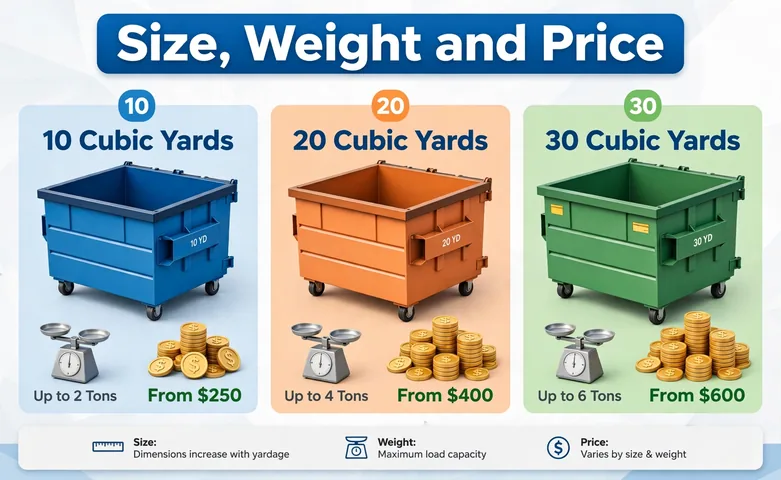
Fixr puts the national average cost to rent a residential dumpster at $200 to $550 per week, with most homeowners paying around $380 for a 10-yard container. The price climbs with size, and the table below shows the weekly averages Fixr publishes for roll-off dumpsters.
| Size | Weekly cost |
|---|---|
| 10 yard | $250 to $400 |
| 20 yard | $275 to $450 |
| 30 yard | $300 to $750 |
| 40 yard | $350 to $900 |
These are national averages, not quotes, and big-city prices can run higher. Type the base price from your own quote into the calculator, and plan the wider project with our budget calculator first.
Why Weight Sets the Bill, Not Size
A dumpster is sold by volume, in cubic yards, but it is billed by weight. The included weight in your quote is the line that decides whether the final bill matches the quote, and heavy materials reach it long before the container looks full.
The U.S. Environmental Protection Agency publishes volume-to-weight factors for debris. Mixed household junk runs about 250 to 300 pounds per cubic yard, drywall runs 467 pounds, and roofing shingles run 731 pounds. A 20-yard load of mixed junk weighs roughly 2.5 to 3 tons, while the same 20 yards of shingles weighs over 7 tons. The shingles blow past a 2-ton allowance by 5 tons, which at $75 a ton adds $375 to the bill.
Concrete and dirt are in a different league again, at roughly 860 and 929 pounds per cubic yard, so they need a dedicated heavy-debris container. If your load is mostly concrete, work out the volume first with our concrete calculator, then ask for a heavy-debris price. For a mixed load, sort the heavy material out before you guess the weight.
Common Dumpster Rental Mistakes
Underestimating the weight is the most expensive mistake, and the worked example shows why a single extra ton costs $75. Weigh heavy debris separately, and round the estimate up rather than down. A slightly high guess costs nothing if the real weight comes in lower, because overage is only charged on the tons you actually go over.
Forgetting the permit is next. A dumpster on your driveway usually needs no permit, but one on the street often does, and the fee is yours to pay. Ask your city before delivery day, because a hauler who arrives without a permit may leave without dropping the container.
Keeping the dumpster too long is quieter but real. Most quotes cover 7 days, and extra days run $5 to $15 a day at published rates, so load the heavy items first and have the container ready for pickup on schedule. Finally, check the prohibited list on your quote. Tires, appliances, paint and electronics are commonly banned or billed separately.
Disclaimer
This calculator gives an estimate for planning and is for informational purposes only, not financial advice. Actual rental prices, weight allowances and fees depend on your hauler, your area and your debris. See our disclaimer.

Sources
- U.S. EPA: Volume-to-Weight Conversion Factors. U.S. Environmental Protection Agency, April 2016, debris densities per cubic yard.
- Fixr: Cost to Rent a Dumpster. National average rental prices by size and rental period.
Frequently asked questions
How much does it cost to rent a dumpster?
Fixr puts the national average at $200 to $550 per week, with most homeowners paying around $380 for a 10-yard container. A 20-yard typically runs $275 to $450 a week, before overage, extra days or a permit fee.
What is the overage fee for a dumpster?
Published overage rates typically run $40 to $100 per ton over the included weight. This calculator multiplies the tons over your allowance by the rate on your quote, so a 1.5-ton overage at $75 a ton adds $112.50.
How much weight is included in a dumpster rental?
Most quotes include 1 to 4 tons, and the exact allowance depends on the size and the hauler. Published ranges run 1 to 3 tons for a 10-yard and 1.5 to 4 tons for a 20-yard, so always read the number on your own quote.
How many days can you keep a rented dumpster?
Most quotes cover 7 days. Extra days typically cost $5 to $15 per day at published rates, so 3 extra days at $10 a day adds $30.00 to the bill.
Do I need a permit for a dumpster?
Usually only when the dumpster sits on a public street. A container on your own driveway normally needs no permit. Street permit fees typically run $10 to $100, depending on your city.
How do I estimate the weight of my debris?
Use the EPA volume-to-weight factors as a guide. Mixed household junk runs about 250 to 300 pounds per cubic yard, drywall 467 pounds and roofing shingles 731 pounds, so heavy materials weigh far more than the same volume of light junk.
Related calculators

Budget Calculator
Plan the full project budget, including the dumpster, before you book.
Use calculatorConcrete Calculator
Work out how much concrete a slab or footing needs, in cubic yards.
Use calculatorAsphalt Calculator
Estimate asphalt by area and depth for a driveway or patch.
Use calculatorCarpet Calculator
Measure carpet by room size, with waste allowance included.
Use calculatorBrick Calculator
Count bricks and mortar for a wall from its length and height.
Use calculatorPercentage Calculator
Find what P% of any number is, instant answers with the formula shown.
Use calculator