Fence Calculator: Materials for Your Fence Project
Building a fence starts with a materials list — and guessing wrong means extra trips to the lumber yard. Enter your fence length and height, and this free fence calculator will estimate the posts, rails, pickets and concrete bags you need.
Formulas verified against standard references. Calculator logic tested with verified worked examples. Last reviewed: October 2026. Our methodology
How fence materials are estimated
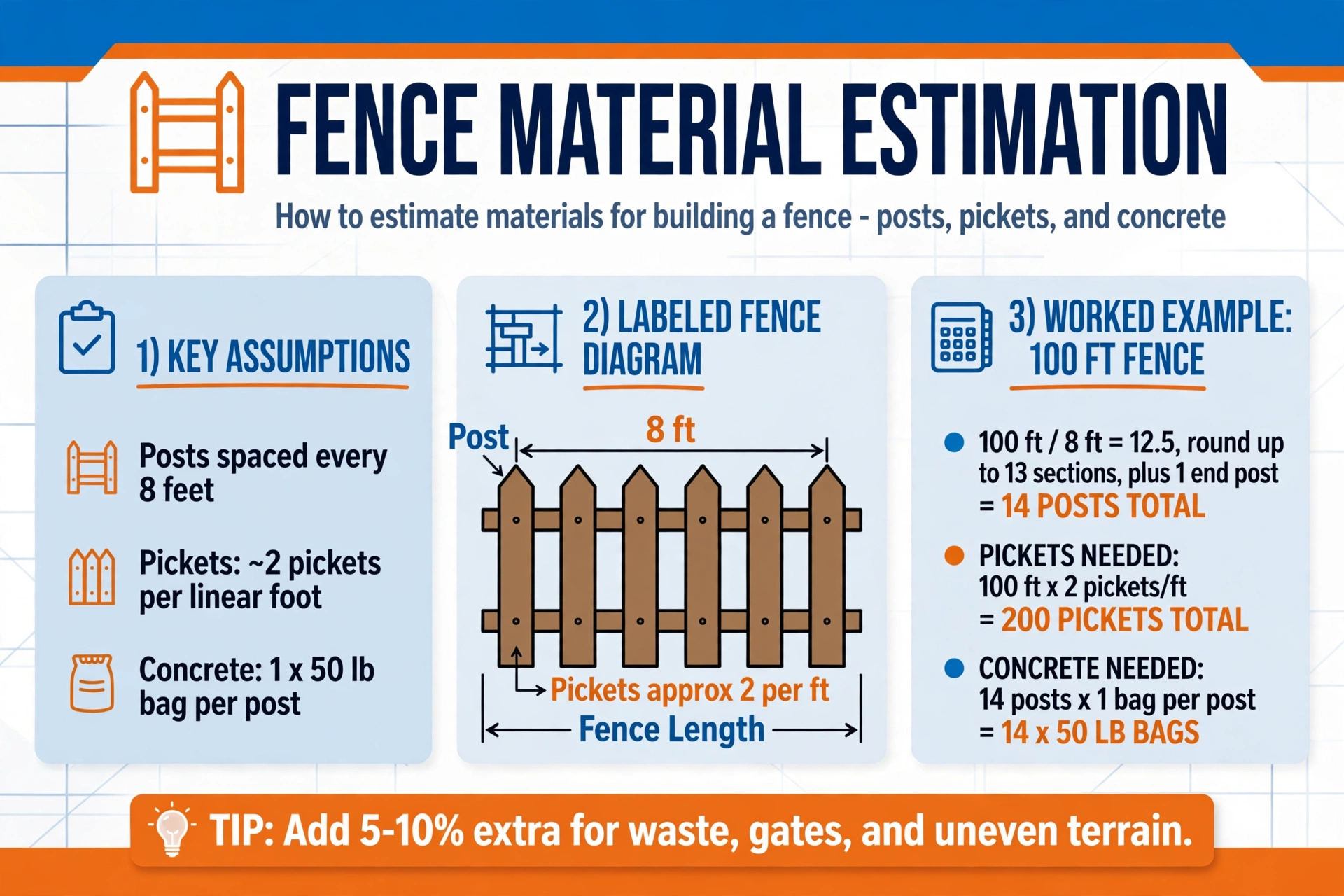
A fence is a repeating module: post, span, post, span. Count the modules and the materials follow:
- Posts = ceil(length ÷ spacing) + 1 — one more post than spans, for the end post.
- Rails = 2 per section (3 for 8 ft fences) — the horizontal boards pickets nail to.
- Pickets ≈ length × 12 ÷ picket width — linear feet converted to inches, divided by each picket's width.
- Concrete = 1 × 50 lb bag per post — the standard footing for a 4×4 post.
| 100 ft fence, 8 ft spacing | Estimate |
|---|---|
| Posts (100 ÷ 8 = 12.5 → 13 sections + 1) | 14 |
| Pickets (~2 per foot) | ≈ 200 |
| Rails (2 per section) | 26 |
| Concrete (50 lb bags) | 14 |
Always add 5–10% extra for waste, miscuts and uneven terrain — and plan gates separately, since gate posts need deeper footings and heavier hardware.
Worked example
You are building a 100 ft long, 6 ft tall privacy fence with posts every 8 ft and 6-inch pickets.
Posts: 100 ÷ 8 = 12.5 → round up to 13 sections, plus 1 end post = 14 posts. Rails: 13 sections × 2 = 26 rails. Pickets: 100 × 12 ÷ 6 = 200 pickets. Concrete: 14 posts × 1 bag = 14 bags of 50 lb concrete. Add 10% waste: buy 16 posts, 220 pickets, 16 bags.
How to use the fence calculator
Measure your fence line first — a tape measure and a helper beat guessing every time.
Step by step
- Enter the fence length in feet. The total linear run, gates included in the length.
- Select the fence height. 4 ft (decorative), 6 ft (standard privacy) or 8 ft (maximum privacy).
- Enter post spacing. 8 ft is standard; use 6 ft in high-wind areas.
- Enter picket width. 6 inches is typical for privacy fences.
- Press Calculate. Take the materials list to the store — plus 5–10% extra.
Post spacing: 6 ft vs. 8 ft
Spacing is the structural decision — closer posts mean a stiffer fence:
| Spacing | Posts per 100 ft | Best for |
|---|---|---|
| 8 ft | 14 | Standard privacy fences, calm areas |
| 6 ft | 18 | High wind, heavy gates, 8 ft tall fences |
Tighter spacing costs ~30% more in posts and concrete but dramatically stiffens the fence. In windy regions or for tall fences, 6 ft spacing pays for itself in longevity.
Pickets, rails and concrete: the details
The small choices that change the materials list:
- Picket width: 6-inch pickets need ~2 per foot; 4-inch pickets need ~3. Wider pickets = fewer boards, more gaps to mind.
- Rails: 2 per section under 6 ft; 3 for 8 ft fences to stop tall pickets bowing.
- Concrete: one 50 lb bag per post suits a 4×4 in normal soil; use 1.5–2 bags in sandy soil or for gate posts.
- Post size: 4×4 for fences up to 6 ft; 6×6 for 8 ft fences and all gate posts.
Pressure-treated lumber rated for ground contact is non-negotiable for posts — untreated posts rot in a few seasons. A concrete calculator refines the footing math if you are pouring custom footings.
Planning gates and the waste factor
Gates are where fence projects go wrong:
- Gate posts need deeper holes (36+ inches), more concrete, and 6×6 lumber — never standard line posts.
- Measure the gate opening before buying hardware; hinges and latches come in fixed sizes.
- The 5–10% waste factor covers miscuts, warped boards and rocky holes — on a 100 ft fence that is 2 extra posts and ~20 pickets.
- Call 811 (US) before you dig — hitting a utility line is the most expensive mistake in fencing.
For the deck that often follows the fence, a deck calculator estimates boards, joists and screws the same way.
Frequently asked questions
How many posts do I need for a 100 ft fence?
With standard 8 ft spacing: 100 ÷ 8 = 12.5, round up to 13 sections, plus 1 end post = 14 posts. Tighter 6 ft spacing needs 18 posts.
How many pickets per foot of fence?
About 2 per linear foot with standard 6-inch pickets (12 ÷ 6 = 2). A 100 ft fence needs roughly 200 pickets, plus 5–10% extra for waste.
How much concrete per fence post?
One 50 lb bag per 4×4 post is the standard estimate for normal soil. Use 1.5–2 bags in sandy soil, and always more for gate posts.
How deep should fence post holes be?
One-third of the post's above-ground height, minimum 24 inches — 36+ inches for gate posts and frost-prone regions. Deeper beats wider for stability.
Do I need 2 or 3 rails per section?
Two rails for fences up to 6 ft tall; three for 8 ft fences, where the extra rail stops tall pickets from bowing between posts.
Should post spacing be 6 or 8 feet?
8 ft is standard and cheapest. Use 6 ft in high-wind areas, for 8 ft tall fences, or anywhere a gate hangs — the extra stiffness is worth the ~30% more posts.
How do I account for a gate?
Include the gate's width in the fence length, but give gate posts deeper footings (36+ in), 6×6 lumber, extra concrete, and dedicated gate hardware — plan gates separately from the line-post math.