Income Tax Calculator: Estimate Tax in 6 Countries
Estimate your income tax with verified 2026 brackets for the USA, UK, Pakistan, India, Canada and Australia — or enter custom brackets. See total tax, effective and marginal rates, and net income.
The income tax formula
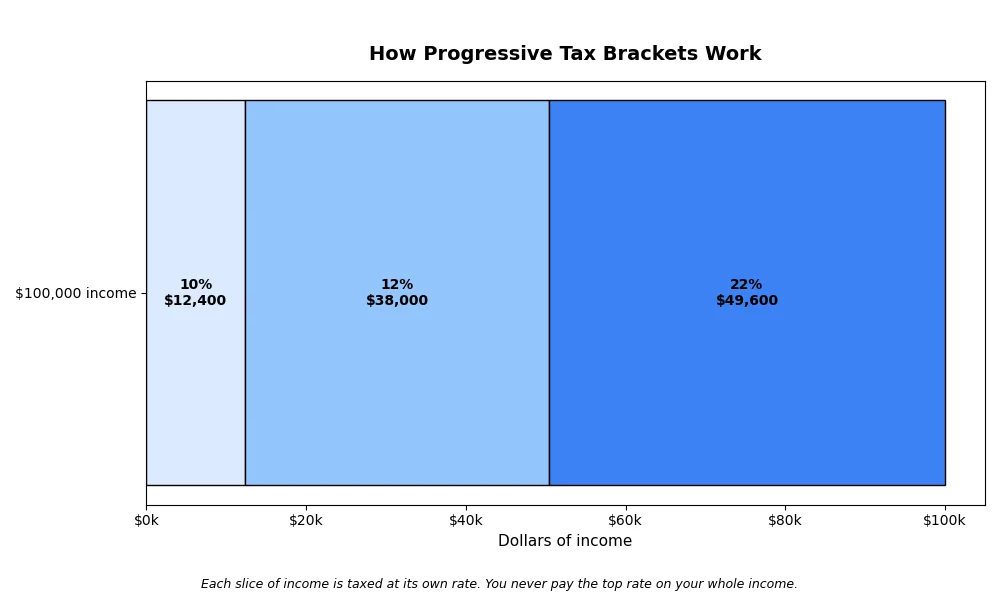
Income tax in most countries uses progressive brackets: each slice of your income is taxed at its own rate. The formula is:
Tax = (slice1 x rate1) + (slice2 x rate2) + ... + (slicen x raten)
Your marginal rate is the rate on your last dollar of income. Your effective rate is total tax divided by total income — always lower than your marginal rate under a progressive system. Net income = gross income - total tax.
Worked example
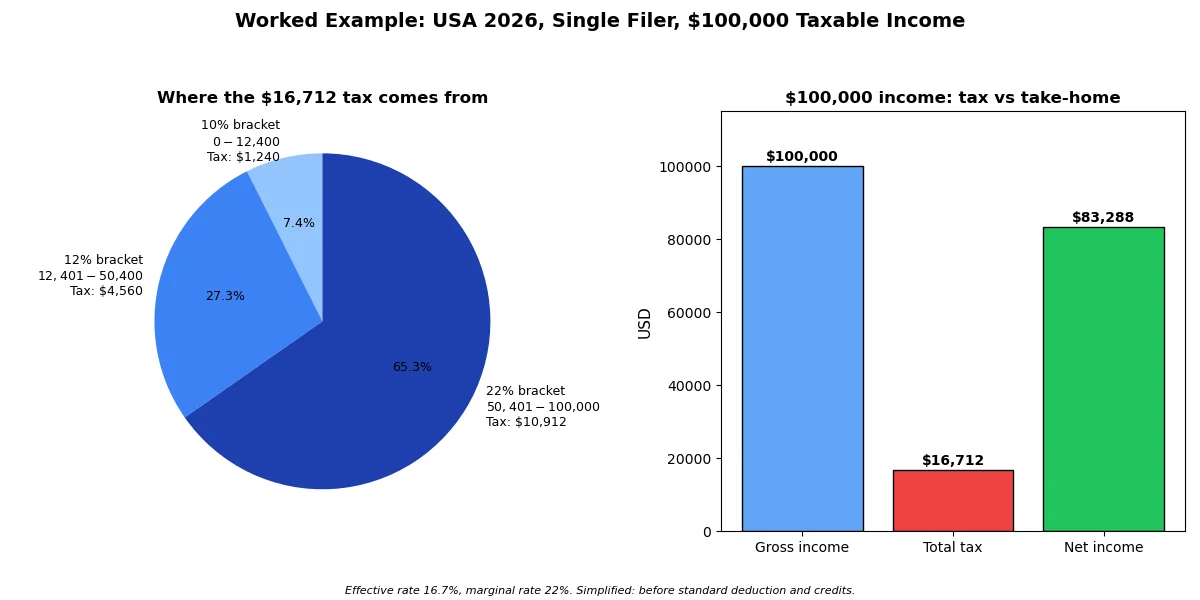
A single filer in the USA with $100,000 of taxable income in 2026:
| Bracket | Income slice | Rate | Tax |
|---|---|---|---|
| $0 - $12,400 | $12,400 | 10% | $1,240 |
| $12,401 - $50,400 | $38,000 | 12% | $4,560 |
| $50,401 - $100,000 | $49,600 | 22% | $10,912 |
Total tax = $1,240 + $4,560 + $10,912 = $16,712. Effective rate = 16.7%, marginal rate = 22%, net income = $83,288. This is simplified — it ignores the $16,100 standard deduction and credits. If you want to see how that net income compounds when saved, try our compound interest calculator.
How to use the income tax calculator
- Pick your country from the dropdown. Brackets are pre-loaded with verified 2026 figures.
- Enter your annual taxable income in the local currency and press Calculate.
- Read the results: total tax, effective and marginal rates, net income, and a per-bracket breakdown.
- Custom option: choose Custom to enter up to 5 of your own brackets — useful for provinces, states, or historical years.
The calculator covers national-level income tax only. It does not include social charges (such as US Social Security, UK National Insurance, or Australia's Medicare levy), state or provincial taxes, or personal credits and deductions. Treat the result as an estimate. For salary breakdowns by pay period, see our salary calculator.
2026 tax brackets by country
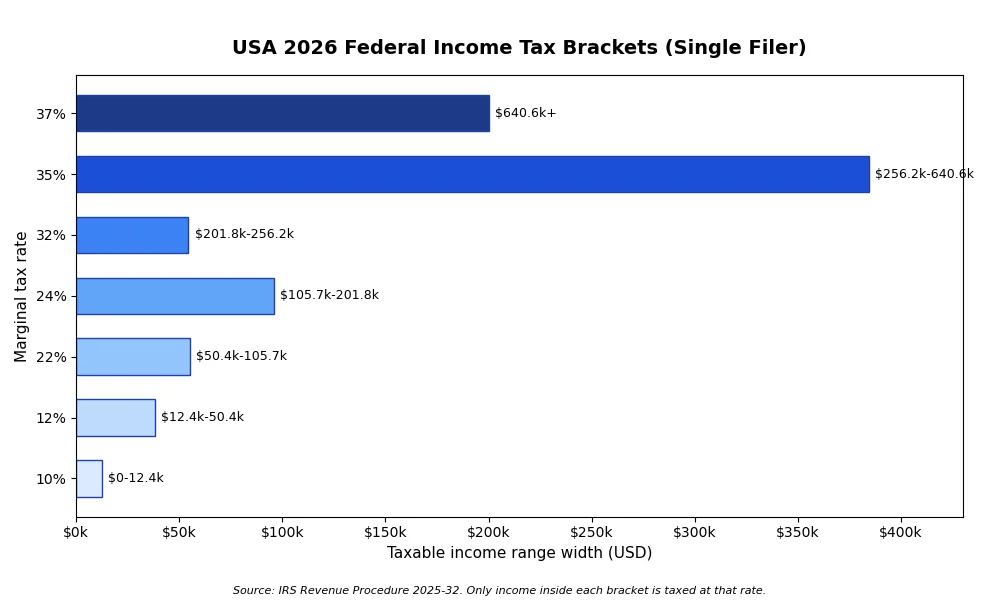
The calculator uses these verified 2026 brackets. Rates apply to taxable income — only the slice inside each bracket is taxed at that rate.
| Country | 2026 brackets |
|---|---|
| USA (federal, single) | 10% to $12,400; 12% to $50,400; 22% to $105,700; 24% to $201,775; 32% to $256,225; 35% to $640,600; 37% above |
| UK (2026/27) | 0% to £12,570; 20% to £50,270; 40% to £125,140; 45% above |
| Pakistan (salaried, FY 2026-27) | 0% to Rs 600k; 1% to Rs 1.2m; 11% to Rs 2.2m; 20% to Rs 3.2m; 25% to Rs 4.1m; 29% to Rs 5.6m; 32% to Rs 7m; 35% above |
| India (new regime, FY 2026-27) | Nil to ₹4L; 5% to ₹8L; 10% to ₹12L; 15% to ₹16L; 20% to ₹20L; 25% to ₹24L; 30% above |
| Canada (federal) | 14% to $58,523; 20.5% to $117,045; 26% to $181,440; 29% to $258,482; 33% above |
| Australia (resident, 2026-27) | 0% to $18,200; 15% to $45,000; 30% to $135,000; 37% to $190,000; 45% above |
Sources: IRS Revenue Procedure 2025-32 (USA); HMRC (UK); Finance Act 2026 (Pakistan); Union Budget 2026 (India); CRA (Canada); ATO (Australia).
Marginal vs effective tax rate
Your marginal rate is the tax on your next dollar of income — the bracket your last dollar falls into. Your effective rate is total tax divided by total income. Because lower slices are taxed at lower rates, your effective rate is always below your marginal rate.
This matters for decisions: a raise is evaluated at your marginal rate, but your overall burden is the effective rate. Earning more never leaves you with less after tax under a progressive system — only the extra slice faces the higher rate.
5 ways to lower your income tax bill
- Use tax-advantaged accounts. Retirement contributions (401k, IRA, RRSP, super) reduce taxable income in many countries.
- Claim every deduction and credit. Standard deductions, work expenses and credits directly cut your bill — check your country's list each year.
- Time your income. If you control when income arrives, spreading it across years can keep more of it in lower brackets.
- Harvest losses. Offsetting investment gains with losses lowers taxable income in the USA, UK, Canada and Australia.
- Keep records. Receipts for deductible expenses are the difference between claiming and missing legitimate relief.
Tax rules change yearly and this page is not tax advice — confirm with a qualified professional before acting.
Frequently asked questions
How is income tax calculated?
Income tax uses progressive brackets: each slice of your income is taxed at its own rate. Add up the tax from each slice to get your total. For example, under USA 2026 single-filer brackets, a $100,000 taxable income produces $16,712 of tax — an effective rate of 16.7% even though the marginal rate is 22%.
What is the difference between marginal and effective tax rate?
Your marginal rate is the tax on your next dollar of income — the bracket your last dollar falls into. Your effective rate is total tax divided by total income. The effective rate is always lower under a progressive system because lower slices are taxed at lower rates.
Does earning more ever leave me with less after tax?
No. Under a progressive system only the extra income above a threshold faces the higher rate. A raise always increases your after-tax income, though the gain is smaller once you cross into a higher bracket.
Which countries does this calculator support?
The USA (federal, 2026), UK (2026/27), Pakistan (salaried, FY 2026-27), India (new regime, FY 2026-27), Canada (federal, 2026) and Australia (resident, 2026-27). Choose Custom to enter up to 5 of your own brackets for any other jurisdiction.
Does the calculator include state or provincial taxes?
No. It covers national-level income tax only. US state taxes, Canadian provincial taxes, and charges like UK National Insurance or Australia's 2% Medicare levy are not included, so treat the result as an estimate.
Are deductions and tax credits included?
No. The calculator applies brackets to the taxable income you enter. Standard deductions, personal allowances already reflected in zero-rate bands, and credits are not modelled — check your country's rules for what reduces your bill.
How accurate are the 2026 brackets?
Brackets are taken from official 2026 publications: IRS Revenue Procedure 2025-32, HMRC, Pakistan's Finance Act 2026, India's Union Budget 2026, the CRA, and the ATO. Tax law changes frequently, so confirm with an official source or professional before filing.
Related calculators

Salary Calculator
Convert hourly, weekly, monthly and annual pay with overtime rates.
Use calculatorCompound Interest Calculator
See how your savings grow with compounding interest over time.
Use calculator
Percentage Calculator
Find what P% of any number is — instant answers with the formula shown.
Use calculator